Supporting Your
Family Through
Dementia
Practical memory strategies, gentle brain games, and emotional support for families caring for a loved one with dementia. You are not alone.
Memory Strategies That Help
These evidence-informed approaches can help your loved one feel more secure, connected, and engaged - at every stage of their journey.
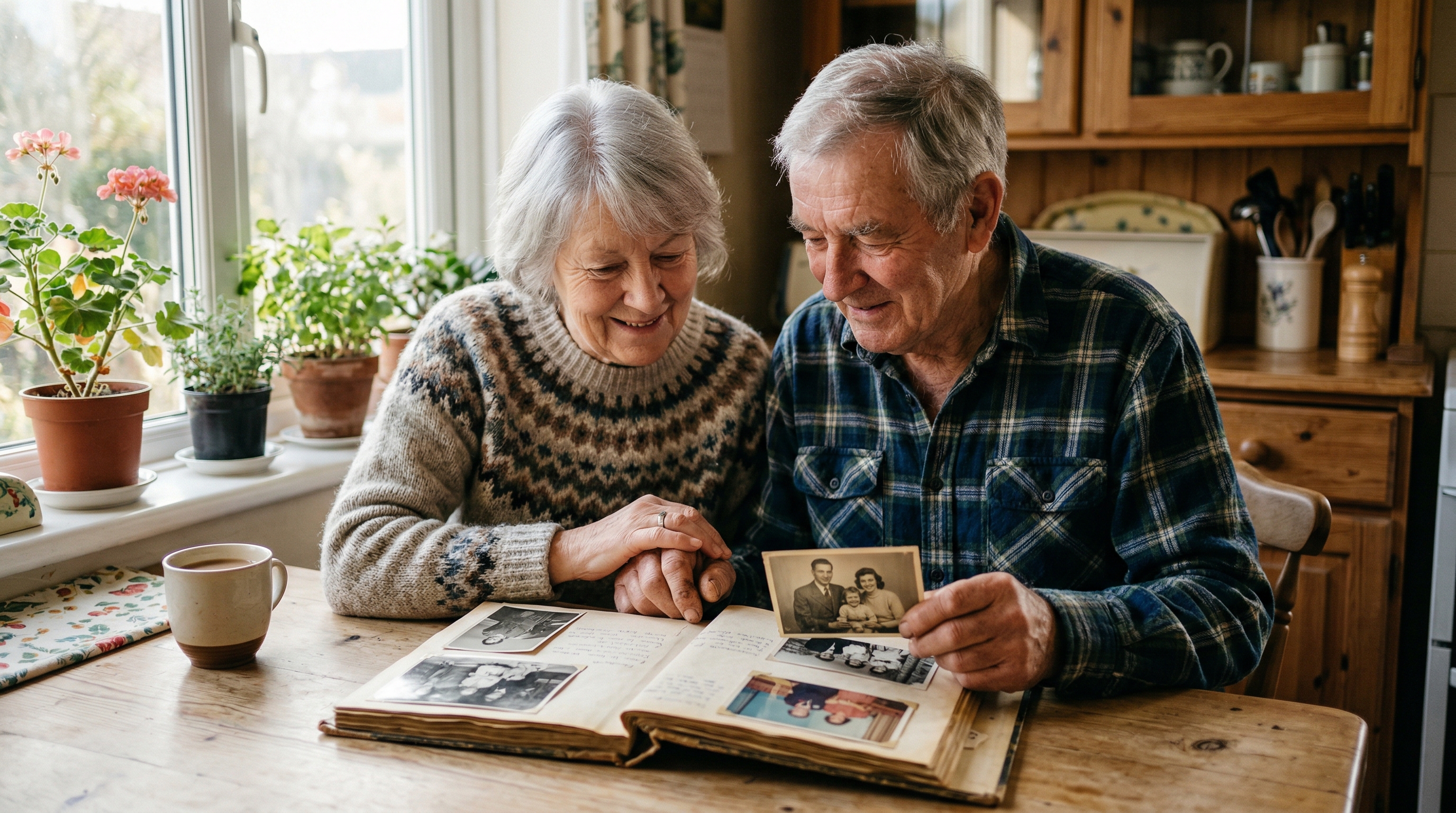
Life Story Books
Create a personalised photo album with names, dates, and stories. Looking through familiar faces and places can spark recognition and bring comfort.
Daily Routine Anchors
Consistent routines reduce anxiety and confusion. Familiar patterns give the brain predictable cues that support orientation and reduce distress.
Music and Reminiscence
Music from a person's youth is stored in a different part of the brain and is often preserved longer. Songs can unlock memories and lift mood significantly.
Sensory Stimulation
Touch, smell, and taste can trigger powerful memories. Familiar scents like lavender, baking bread, or a favourite perfume can calm and orient.
Meaningful Activities
Purposeful activities that connect to a person's past interests and identity help maintain dignity and a sense of self.
Communication Techniques
How you communicate matters as much as what you say. Simple adjustments reduce frustration and help your loved one feel heard and respected.
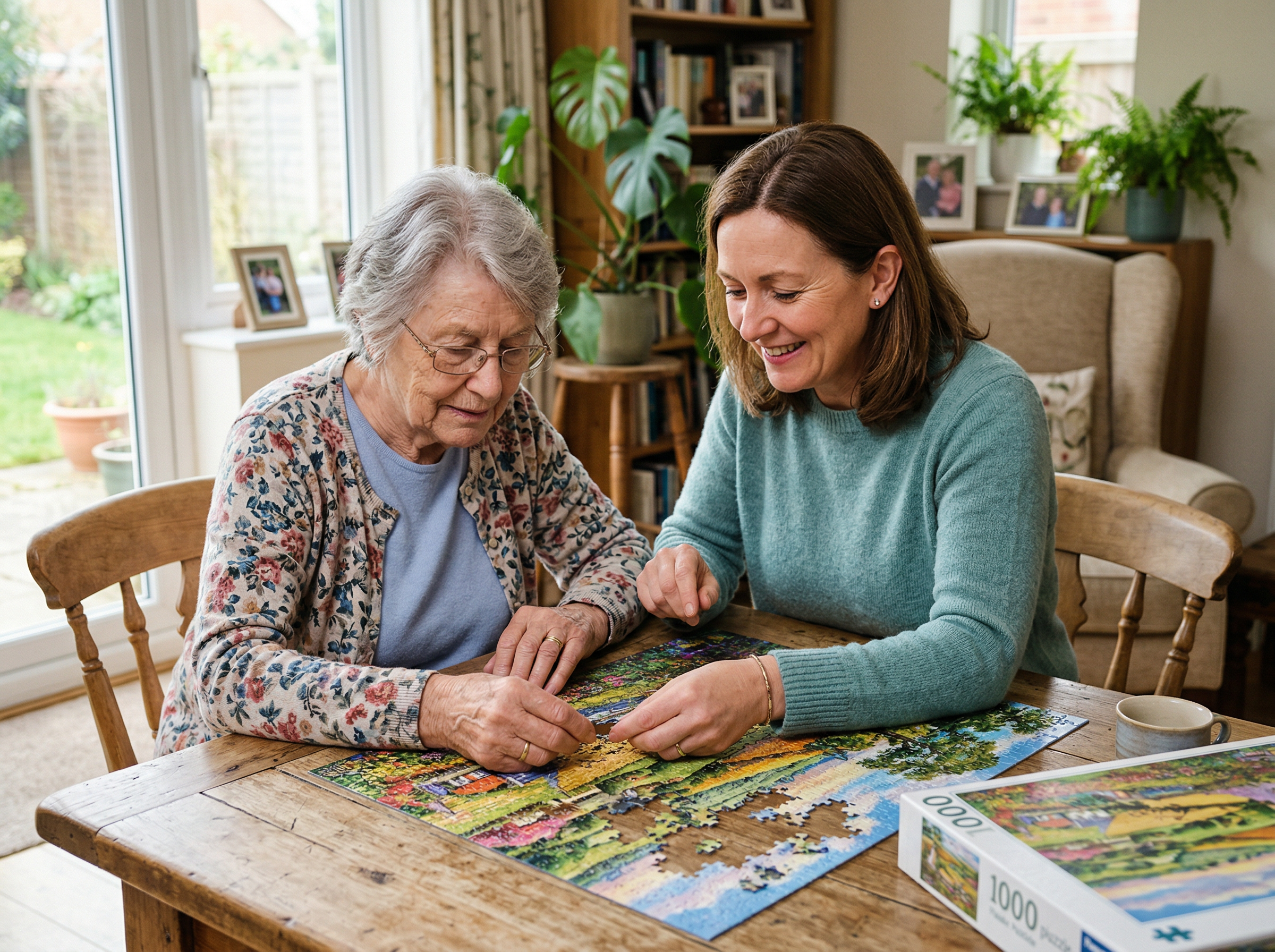
Shared Activities Strengthen the Bond
Research consistently shows that social engagement and meaningful activity are among the most powerful tools available to families supporting someone with dementia.
It is not about getting things right or completing tasks. It is about being present, sharing a moment, and helping your loved one feel valued and loved.
Gentle Games for Every Stage
These activities are designed to be done together with your loved one. Each one is adaptable, pressure-free, and focused on engagement rather than performance.
Memory Match
Match pairs of picture cards. Start with just 6-8 cards and use familiar images like animals, flowers, or household objects.
How to play:
Place cards face down. Take turns flipping two cards at a time. If they match, keep them. Celebrate every match warmly.
Adaptations:
Number Sorting
Sort numbered tiles or cards into order. This engages procedural memory which is often preserved longer in dementia.
How to play:
Lay out numbers 1-10 in a random order. Ask them to put them in order. Offer gentle prompts rather than corrections.
Adaptations:
Colour Matching
Match objects, fabrics, or cards by colour. A calming, visually engaging activity that requires no reading or writing.
How to play:
Gather colourful objects from around the home. Ask them to group items by colour. Chat about favourite colours as you go.
Adaptations:
Simple Jigsaws
Jigsaws with large pieces and familiar images - landscapes, animals, or nostalgic scenes - are ideal for gentle cognitive engagement.
How to play:
Choose a puzzle with 12-24 large pieces. Work on it together without pressure to finish. Focus on the process, not the result.
Adaptations:
Word Association
Say a word and ask them to say the first word that comes to mind. Familiar topics like food, animals, and places work best.
How to play:
Start with a familiar category: 'Name a fruit'. Build on what they say with warmth. Never put pressure on finding the right answer.
Adaptations:
Reminiscence Quiz
Gentle questions about the past - old songs, famous faces from their era, or historical events they lived through.
How to play:
Ask about their past: 'What was your favourite song when you were young?' Use photos or objects as prompts. Listen more than you quiz.
Adaptations:
Want more cognitive training games? Our full Brain Games section has 7 clinically-informed exercises.
Explore All Brain GamesYour Wellbeing Matters Too
Caring for someone with dementia is one of the most demanding and emotionally complex roles a person can take on. Here is how we can support you.
Look After Yourself Too
Carer burnout is real. You cannot pour from an empty cup. Taking breaks, asking for help, and processing your own emotions is not selfish - it is essential.
Build a Support Network
Connect with other families in similar situations. Dementia UK, Alzheimer's Society, and local carer groups offer invaluable peer support and practical advice.
Talk to Someone
The emotional weight of caring for someone with dementia is significant. Our AI Chat and guided programmes can help you process grief, frustration, and love.
Know Your Rights
As a carer, you are entitled to a carer's assessment from your local council. This can unlock respite care, financial support, and practical help.
UK Dementia Support Resources
These organisations provide specialist support, advice, and community for people living with dementia and their families.
Dementia UK
Free HelplineFree specialist dementia support from Admiral Nurses. Call the helpline for expert advice, emotional support, and practical guidance.
Alzheimer's Society
National CharityThe UK's leading dementia charity. Local support groups, information resources, and a national helpline for families.
NHS Dementia Guide
NHSComprehensive NHS information on dementia types, symptoms, diagnosis, treatments, and local services.
Carers UK
Carer SupportSupport and advice specifically for unpaid carers. Benefits guidance, respite information, and a community of fellow carers.
Age UK
Older AdultsPractical support for older people and their families, including home care, befriending services, and local activities.
Alzheimer's Research UK
ResearchThe UK's leading dementia research charity. Up-to-date information on research, treatments, and clinical trials.
Common Questions
You Are Not Alone in This
Caring for someone with dementia is one of the most loving things a person can do. Let us help support both of you on this journey.
This hub provides information and support only. Always consult your GP or a specialist for medical advice.